
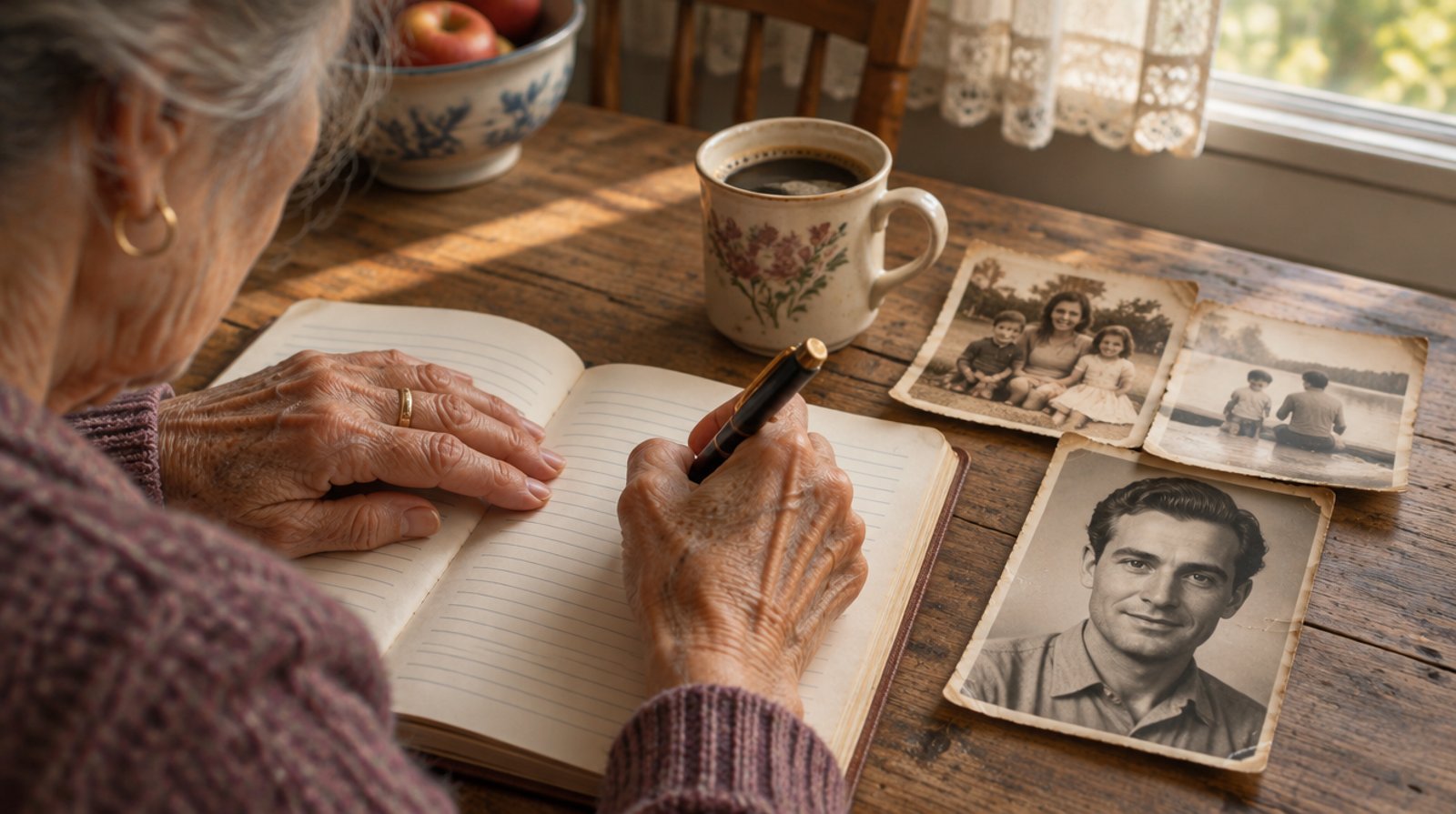
Writing an obituary in the days after a loss can feel impossible. You don't need to be a writer. You need the facts, a few memories, and a simple order to put them in. Here's that order, with real examples you can follow.
Want help with the words? Our free obituary writer asks a few gentle questions, typed or spoken, and drafts the obituary for you, along with a eulogy for the service. No account needed.
What an obituary says
An obituary tells people that someone has died, shares a little of who they were, and lets everyone know how to say goodbye. Most follow the same order:
- The announcement. Their full name, age, where they lived, and the date they died.
- Their life. Where they were born and grew up, their work, their faith, what they loved to do.
- Their family. Who survives them, and who passed before them.
- The service. The day, date, time and place of the funeral, visitation or celebration of life.
- How to honor them. Flowers, or a charity the family has chosen.
That's all it has to do. Everything else is a way of making it sound like them.
How to write an obituary, step by step
1. Gather the facts first
Before writing a word, collect the details: full legal name and any nickname, dates and places of birth and death, the names of close family, and the service details. Getting the facts down first makes the writing much easier, and missing dates are the most common thing that holds an obituary up.
2. Ask the family for one memory each
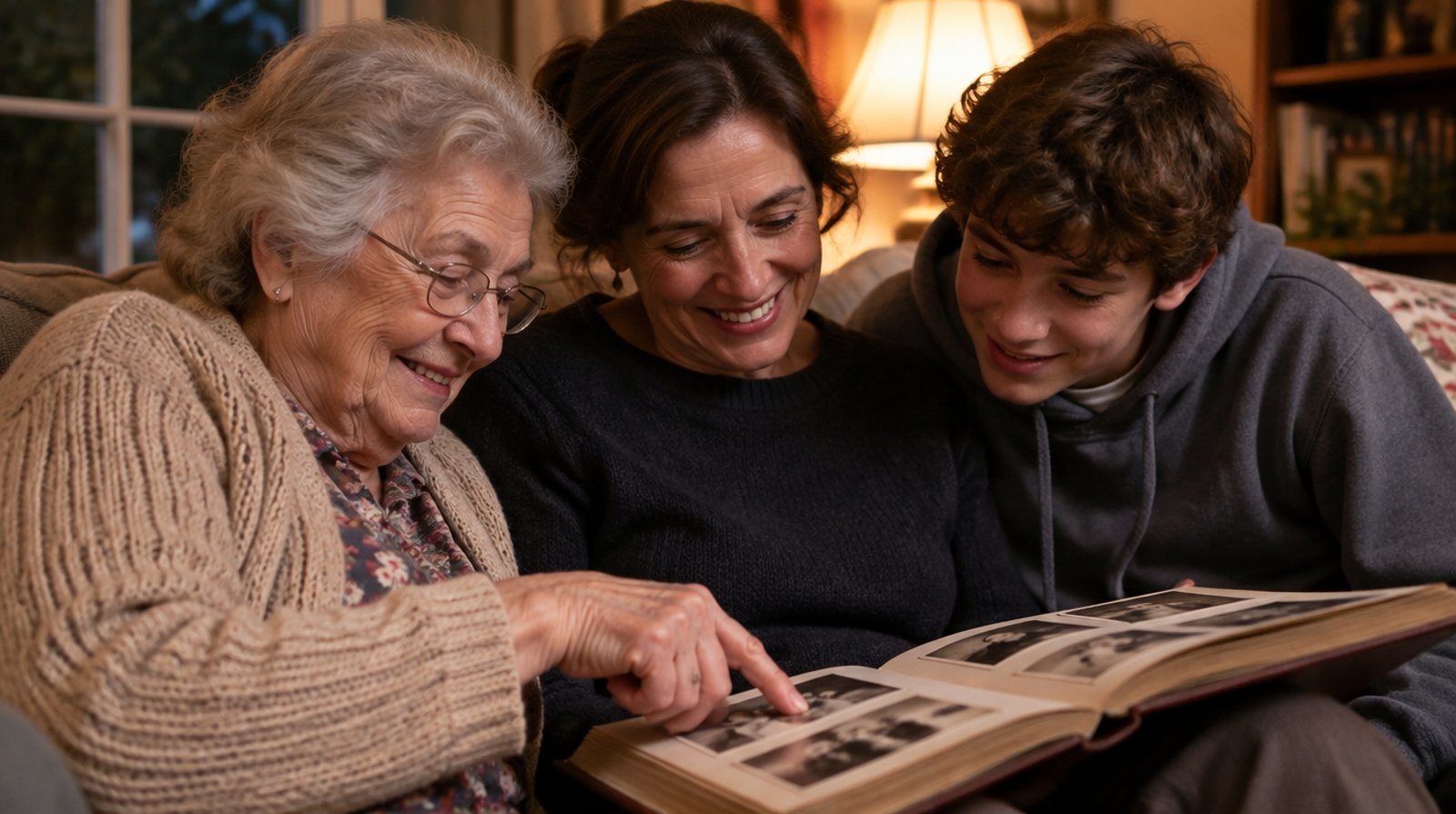 The best lines usually come from asking the family, "What's one thing you'd want people to know?"
Text a few relatives and ask: "What's one thing about them you'd want people to know?" The answers are usually the best lines in the obituary. A grandson remembering every Saturday fishing trip says more than a list of hobbies.
3. Write the opening line
Keep it simple and true: "Margaret Ann Collins, 84, of Huntersville, North Carolina, passed away peacefully at home on November 12, 2026, surrounded by her family." You can soften it ("went home to be with the Lord", "passed away peacefully") or keep it plain. Both are right.
4. Tell their story in a few short paragraphs
Pick three or four things that made them who they were: where they came from, the work they were proud of, the people and places they loved, the small habits everyone will miss. Specific is better than impressive. "She never let anyone leave her kitchen hungry" is more them than "she was a wonderful cook."
5. List the family
Start with a spouse, then children (and their spouses), grandchildren, siblings, and anyone who was family in every way that mattered. Then name those who passed before them. If the list is long, "and many nieces, nephews and friends" is perfectly fine.
6. Add the service details
Write the type of gathering, the day, the date, the time and the full address of the place. If there's a visitation, add it too. Then say how people can honor them: flowers, or a donation to a charity you name.
7. Read it out loud, then have someone check it
Reading it aloud catches anything that doesn't sound like them. Then ask one other person to read it for names and dates. A second reader catches the mistakes that matter most.
Obituary examples
These examples are written for this guide, with made-up names. Borrow any line you like.
Example: an obituary for a mother
Margaret Ann Collins, 84, of Huntersville, North Carolina, passed away peacefully at home on November 12, 2026, surrounded by her family.
Born in Asheville in 1942, Margaret married her high school sweetheart, Robert, in 1963, and together they raised three children in the house on Gilead Road. She taught second grade for 31 years, and former students still stopped her at the grocery store to say hello. She never let anyone leave her kitchen hungry, and her Sunday pot roast fed half the neighborhood.
Margaret is survived by her children, Susan (Mark), David (Lisa) and Karen; her seven grandchildren; and her sister, Joan. She was preceded in death by her husband of 52 years, Robert.
A celebration of life will be held Saturday, November 21, at 11 a.m. at Hopewell Presbyterian Church, 10500 Beatties Ford Road, Huntersville. In lieu of flowers, the family asks that donations be made to Hospice of the Carolinas.
Example: an obituary for a father
James "Jim" Walker, 71, of Columbus, Ohio, died on October 30, 2026, after a short illness.
Jim served four years in the U.S. Navy and spent 38 years as an electrician, the kind of man every neighbor called first when something stopped working. He coached Little League for twenty summers, never missed a Buckeyes game, and spent every Saturday morning fishing with his grandsons on Hoover Reservoir.
He is survived by his wife of 48 years, Linda; his sons, Michael and Brian; four grandchildren; and his brother, Tom. A funeral will be held Thursday, November 5, at 10 a.m. at St. Andrew Catholic Church, with visitation the evening before from 4 to 7 p.m.
Example: a short obituary
Dorothy Mae Price, 92, of Tulsa, Oklahoma, passed away on November 3, 2026. A lifelong gardener and devoted church member, she is survived by her daughter, Ellen, and three grandchildren. A graveside service will be held Monday, November 9, at 2 p.m. at Memorial Park Cemetery.
Let us draft it for you
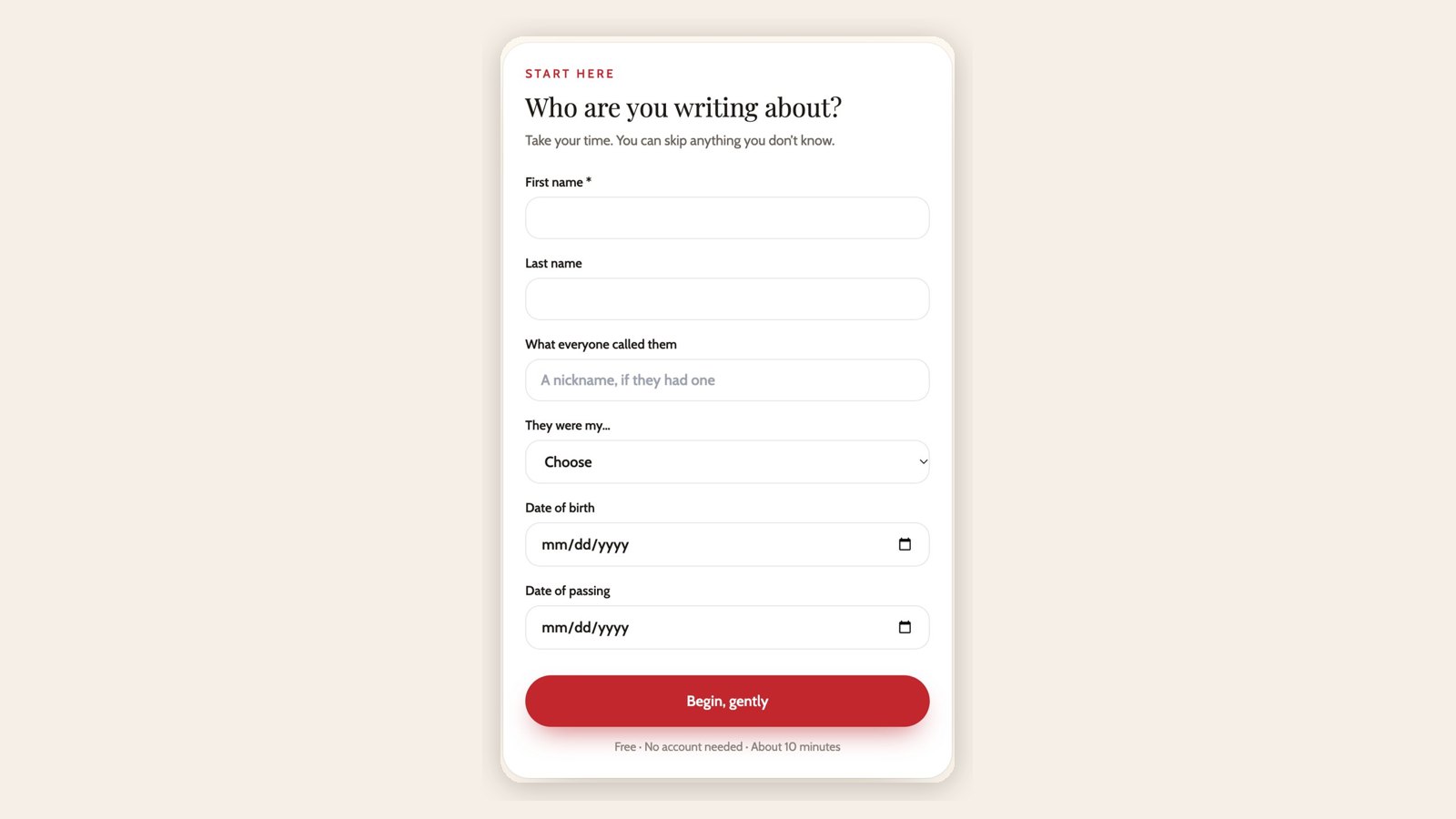 Rememery's free obituary writer starts with a few simple questions.
Answer a few questions about them, out loud or typed, and our free obituary writer turns your words into an obituary, a eulogy and the story of their life. You can edit anything, ask for a warmer or simpler version, and email yourself a copy.
Tips that make an obituary sound like them
- Use their nickname the way everyone said it: James "Jim" Walker.
- Pick one or two details nobody else would know. The song they always hummed, the chair nobody else sat in.
- Keep sentences short. It's easier to write and easier to read aloud at the service.
- Leave out what doesn't serve them, including details about the illness, unless the family wants it there.
- Don't include a home address, since obituaries are public and homes can be targeted during a funeral.
Where to share the obituary
Most funeral homes post obituaries on their own website, usually at no extra cost. Newspapers charge by length, so families often print a shorter version and share the full one online.
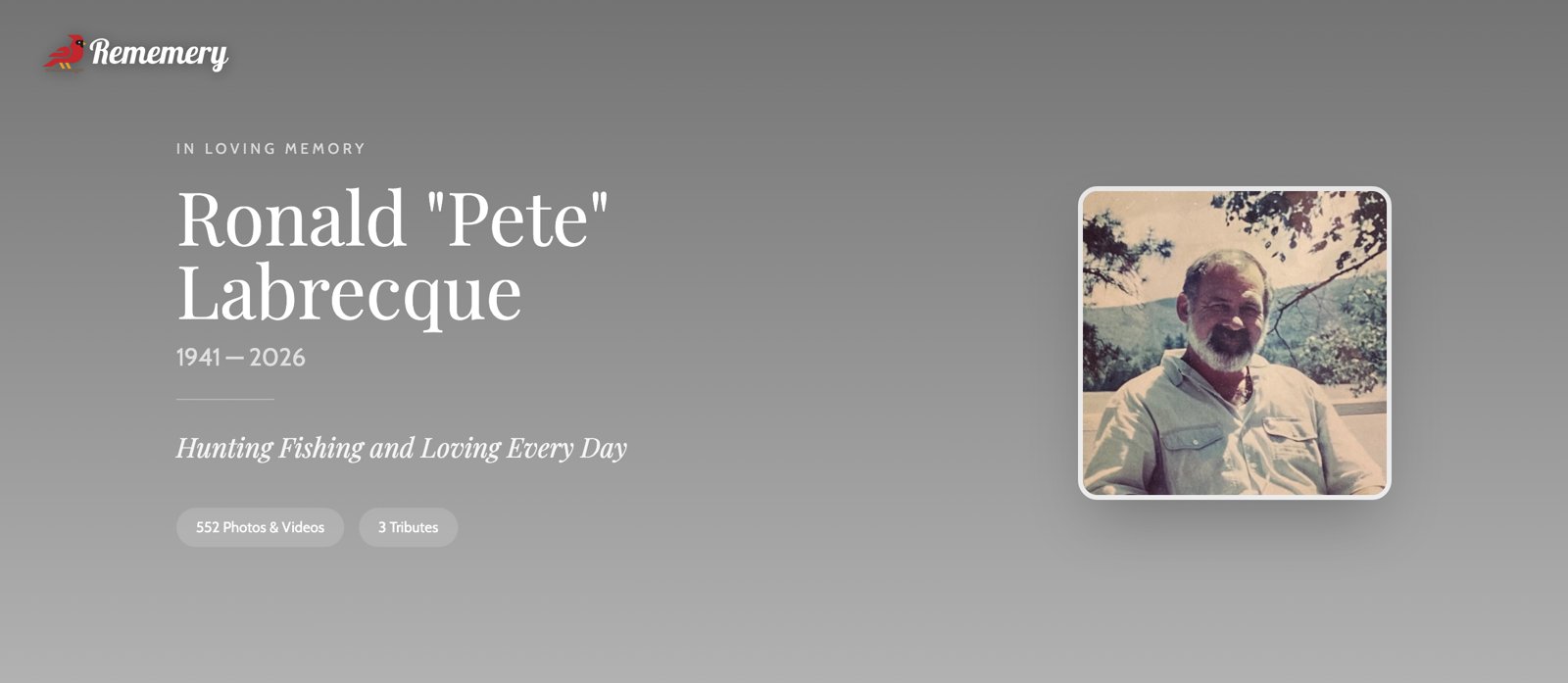 A Memorial Website keeps the obituary together with every photo and memory the family shares.
Many families also make a Memorial Website: a page with the obituary, the service details and every photo and memory, where friends can add their own. It's the link people pass around when they ask, "When's the service?" And if you're putting together photos for the service, a funeral slideshow can be made from the same pictures.